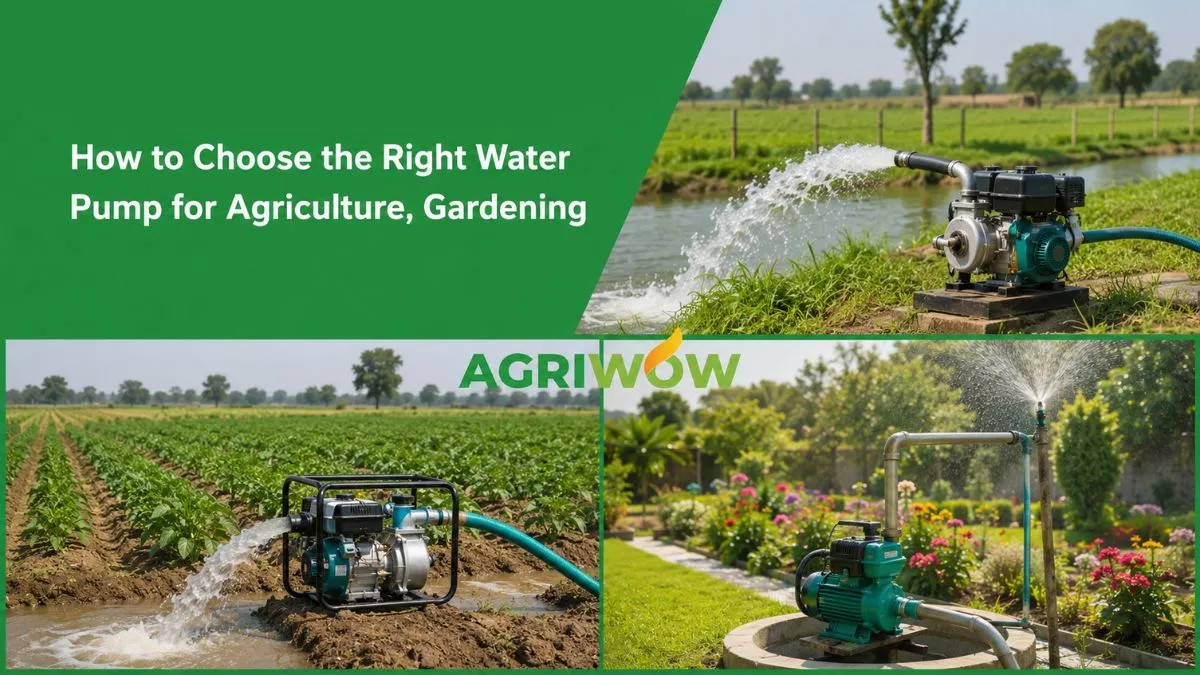
Water is the lifeblood of every green space, whether you are managing a large agricultural field or maintaining a small backyard garden. However, efficient water distribution depends on choosing the right water pump. A poorly selected pump can result in inadequate water supply, increased electricity costs, frequent breakdowns, and reduced productivity.
Understanding the difference between agricultural and garden water pumps helps you select the best option for your specific needs.

Agricultural Water Pumps vs Garden Water Pumps: Key Differences
Although both pumps perform the same basic function—moving water from one place to another—they are designed for different scales and applications. Modern agriculture farm equipments such as advanced irrigation systems and durable pumps play a crucial role in improving farming efficiency.
| Feature | Agricultural Water Pumps | Garden Water Pumps |
| Scale of Use | Large farms and commercial agriculture | Home gardens and small landscapes |
| Water Flow | High-volume water delivery | Low to moderate water supply |
| Pressure Needs | Suitable for large irrigation systems | Ideal for sprinklers and hoses |
| Power Source | Diesel, petrol, solar, or heavy-duty electric motors | Household electric power or batteries |
| Durability | Heavy-duty materials for continuous operation | Lightweight materials for occasional use |
1. Consider the Water Volume You Need
The amount of water required is one of the most important factors when selecting a pump. Agricultural operations usually require high-capacity pumps capable of supplying large quantities of water for crops, orchards, or livestock.
For home users, comparing the water pump price small models can help identify affordable options suitable for gardens, lawns, and basic household watering tasks.
2. Choose the Right Power Source
Agricultural areas often lack easy access to electricity, making diesel, petrol, and solar-powered pumps popular choices. Electric agricultural pumps are also commonly used where three-phase power is available.
Before purchasing a pump, checking the water pump motor price based on motor capacity, brand, and power requirements can help you make a cost-effective decision.
3. Check Water Quality and Debris Levels
Water sources such as rivers, ponds, and canals may contain mud, leaves, or small stones. Agricultural pumps are often designed to handle such impurities, especially trash or semi-trash pumps.
Reliable brands like neptune water pump offer durable solutions designed for efficient water transfer across various agricultural and gardening applications.
How to Select the Perfect Water Pump
Step 1: Identify Your Water Source
Your water source determines the type of pump you need:
- Deep Wells: Submersible pumps are ideal for extracting water from significant depths.
- Ponds, Lakes, and Rivers: Surface centrifugal pumps are suitable for drawing water from open sources.
- Water Tanks and Rain Barrels: Small booster or submersible pumps work well for garden irrigation systems.
Step 2: Calculate the Required Flow Rate
Flow rate represents the amount of water a pump can deliver within a certain period. Large farms require high flow rates to support extensive irrigation systems, while home gardens generally need a much lower flow rate for hoses and sprinklers.
Step 3: Understand Total Dynamic Head (TDH)
A pump’s lifting capability is measured through Total Dynamic Head (TDH), which includes:
- Vertical Lift: The distance water is lifted from the source.
- Static Height: The height between the pump and the final water outlet.
- Friction Loss: Resistance caused by pipes, bends, and fittings.
Always choose a pump that can comfortably meet your required flow rate and TDH. Operating a pump continuously at its maximum capacity can reduce its lifespan.

Which Water Pump Is Best for You?
For home gardening, lawn maintenance, greenhouse watering, or simple cleaning tasks, a compact garden water pump is affordable, easy to use, and highly efficient.
For farming, large irrigation systems, or livestock water supply, a heavy-duty agricultural water pump offers the power, durability, and high water output needed for consistent performance.
Benefits of Using Solar Water Pumps in Modern Agriculture
Solar water pumps are becoming a popular choice among farmers due to their low operating cost and eco-friendly performance. They provide a reliable water supply for irrigation without depending on expensive fuel or unstable electricity. Investing in solar-powered pumping solutions can improve farm productivity while supporting sustainable agriculture.
Final Thoughts
Selecting the right water pump is not just about choosing the most powerful machine—it is about matching the pump with your water source, required flow rate, land size, and application. A well-chosen pump improves water efficiency, reduces operating costs, and ensures healthy crops and gardens for years to come.
FAQ
1. Which water pump is best for agriculture?|
The best water pump for agriculture depends on the farm size, water source, and irrigation requirements. High-capacity centrifugal, submersible, and diesel-powered pumps are commonly used for efficient water supply in large farming operations.
2. How do I choose the right water pump for my garden?
To choose the right garden water pump, consider factors such as water source, required flow rate, pressure, and the size of your garden. A compact electric pump is usually ideal for household watering and small irrigation systems.
3. What is the difference between an agricultural water pump and a garden water pump?
Agricultural water pumps are designed for heavy-duty, high-volume irrigation across large fields, while garden water pumps are smaller and suitable for lawns, plants, and residential watering needs.