Every farmer and gardener understands one simple truth: a successful harvest begins with proper seed planting. However, planting seeds by hand can be time-consuming, physically exhausting, and often results in uneven seed distribution. This is where modern seeder machines come into the picture.
Among the most popular choices are the manual seeder machine and hand push seeders. Although both tools are designed to improve planting efficiency, they differ in speed, convenience, and suitability for different types of farming. These tools have become an essential part of modern agriculture farm equipments used to improve productivity.
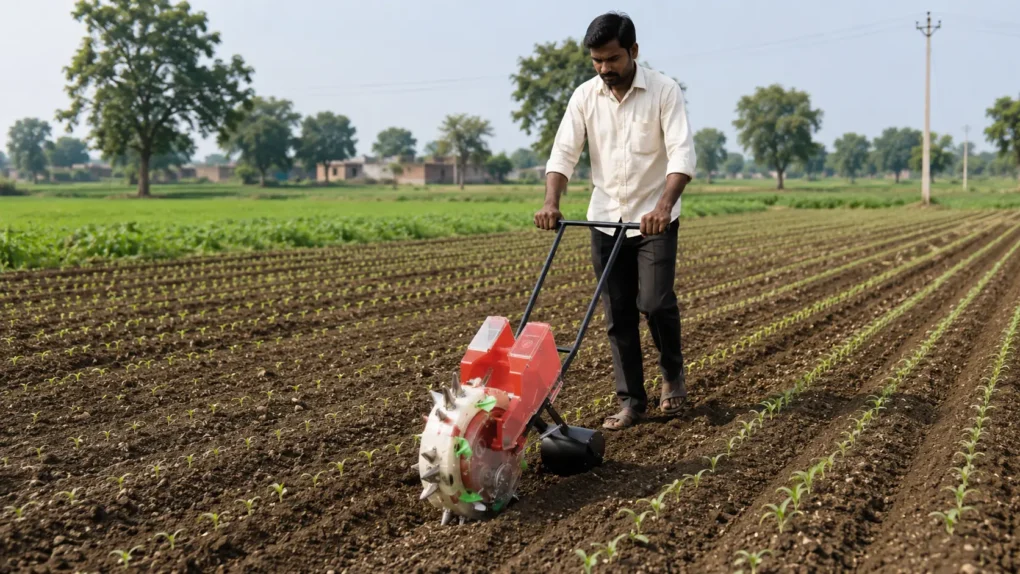
How Seeder Machines Improve Seed Placement and Reduce Seed Wastage
Traditional hand broadcasting often leads to uneven seed spacing, excessive seed use, and poor germination rates. Some areas receive too many seeds, causing overcrowding, while others receive too few.
Seeder machines overcome these problems through accurate planting mechanisms:
1. Accurate Seed Depth
Seeder machines create a consistent furrow depth, ensuring every seed receives the right amount of soil coverage for healthy germination.
2. Uniform Seed Spacing
The seed metering system releases seeds at regular intervals, allowing each plant enough space to receive sunlight, water, and nutrients.
3. Better Seed Protection
Many seeders cover the seeds immediately after placement, protecting them from birds, wind, and environmental damage.
By improving precision, these machines minimize seed wastage and help farmers achieve better crop growth.
Manual Seeder vs. Hand Push Seeder: Key Differences
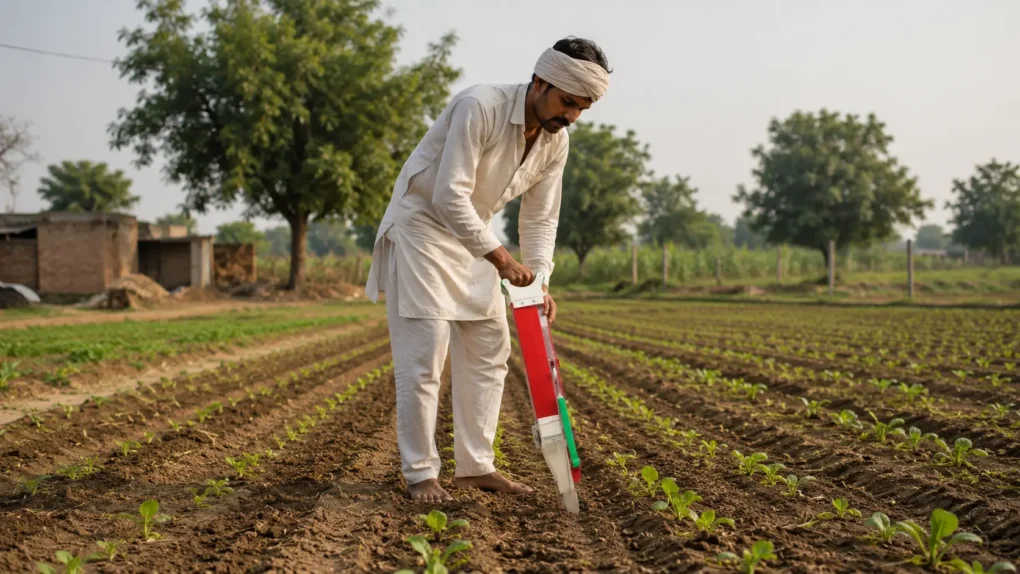
Manual Seeder (Jab Seeder)
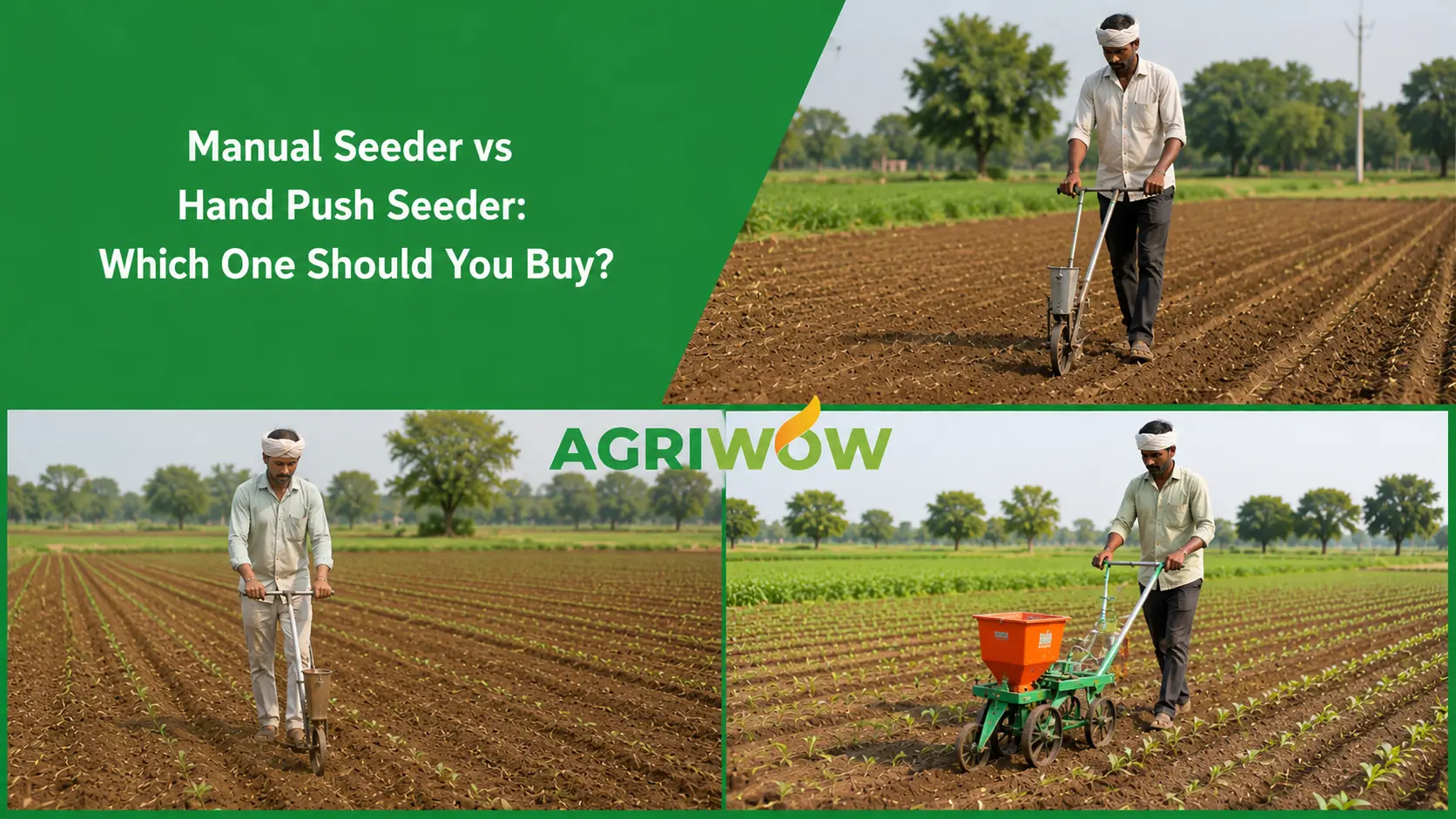
A manual seeder is a simple handheld tool with a seed container attached to a long tube and a pointed tip.
How it works:
The user inserts the tip into the soil and activates a lever or mechanism that releases the seed into the ground.
Best suited for:
- Small gardens and kitchen farms
- Raised planting beds
- Rocky or uneven land
- Intercropping between existing plants
Advantages:
- Low-cost and easy to maintain
- Excellent control over seed placement
- Works well in tight spaces
Hand Push Seeder
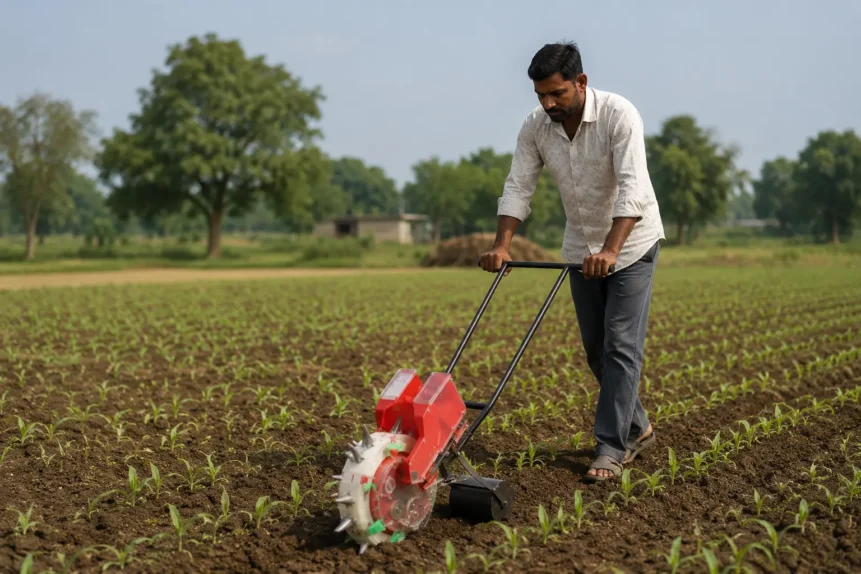
A hand push seeder machine is a wheeled device that allows farmers to plant seeds by simply pushing it along the planting rows.
How it works:
As the wheels rotate, the machine opens the soil, drops seeds at regular intervals, covers them, and lightly presses the soil.
Best suited for:
- Medium-sized farms and vegetable gardens
- Long and straight planting rows
- Crops such as corn, beans, carrots, and radishes
Advantages:
- Faster planting process
- Consistent seed spacing and depth
- Reduces manual effort and saves time
Understanding Seeder Machine Cost
Before purchasing, farmers should compare the seeder machine price based on the machine type, material quality, seed capacity, and additional features. Choosing the right model according to your farming requirements ensures better value and long-term benefits.
Which One Should You Choose?
Choose a manual seeder if you have a small garden, raised beds, or uneven land. It provides excellent precision and is an affordable solution for farmers who want better planting accuracy without a large investment.
Choose a hand push seeder if you plant larger areas with straight rows and need to save time and labor. Its speed, uniform seed placement, and ease of operation make it ideal for efficient crop cultivation.
Benefits of Using a Seeder Machine in Modern Farming
A seeder machine helps farmers achieve accurate seed placement, reduce seed wastage, and save valuable time during sowing. Whether it is a small garden or a large farm, the right seeding equipment improves crop growth, reduces labor, and increases overall farming efficiency.
Final Thoughts
Both manual and hand push seeders are valuable farming tools that improve planting accuracy and reduce seed wastage. The right choice depends on your land size, budget, and farming needs. Investing in the right seeder can increase efficiency, save resources, and help achieve healthier crop growth.
FAQ
Q1. Which is better, a manual seeder or a hand push seeder?
A manual seeder is best for small gardens and uneven land, while a hand push seeder is ideal for larger areas with straight rows as it provides faster and more uniform seed planting.
Q2. What are the benefits of using a seeder machine in farming?
A seeder machine improves seed placement accuracy, reduces seed wastage, saves labor, and helps achieve better crop germination and higher productivity.
Q3. How do I choose the right seeder machine for my farm?
Choose a seeder machine based on your farm size, soil condition, crop type, and budget. Small farms may benefit from manual seeders, whereas larger fields require hand push or advanced seeding machines.